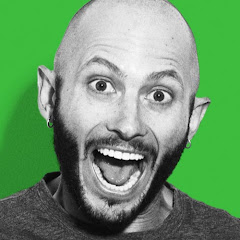
Last year, entrepreneur and AppSumo founder Noah Kagan made $3.3 million — and he broke down exactly how on his YouTube channel. If you've ever wondered how to make $3 million a year from entrepreneurship, the answer isn't a get-rich-quick scheme. It's 15 years of building, failing, reinvesting, and sticking with a business long enough for the compounding to kick in. Here's the complete picture: income sources, tax bill, real expenses, and the raw emotional truth of what that kind of money actually feels like.
 00:45
Noah reacts to saying '$3.3 million' out loud for the first time on camera
Watch at 00:45 →
00:45
Noah reacts to saying '$3.3 million' out loud for the first time on camera
Watch at 00:45 →
How Do You Actually Make $3.3 Million a Year?
The $3.3 million didn't come from one magical source. It came from three distinct revenue streams built over more than a decade of entrepreneurship:
- $1.7 million from AppSumo — This included a $250,000 base salary plus a ~$1.5 million profit distribution. The distribution only happens if the company is profitable after paying the full team, leadership bonuses, company retreats, ads, servers, and all overhead. No profit, no distribution.
- $1 million from YouTube sponsorships — AppSumo sponsors Noah's YouTube channel and content operation through a separate LLC. That deal alone generated $1 million in 2023.
- $600,000 from investments — A mix of real estate returns, equity distributions, and other investment vehicles made up the remaining 18% of total income.
The key takeaway? Roughly 80% of that $3.3 million came directly from entrepreneurship — specifically from one business Noah started with $50 and stuck with for 15 years. In year one of AppSumo, he personally made nothing, even though the business generated $300,000 in revenue. His only goal back then was $3,000 a month so he could work from beaches in Thailand.
What Income Streams Generated $3.3 Million?
Understanding the structure of these income streams matters as much as the numbers themselves. Noah's revenue is not passive in the traditional sense — it's the result of an active business, a content engine, and long-term investment positions working together.
03:20
Revenue breakdown slide showing the three income streams and their dollar amounts
Watch at 03:20 →
The AppSumo distribution model is particularly instructive. Noah doesn't take everything he could. After all business expenses are covered and the team is taken care of, he and his co-founder split what's left. In a bad year — like 2021 when poor decisions and a $1 million Black Friday marketing flop tanked results — his AppSumo income dropped to just $97,000. Revenue streams at this level are volatile. The $3 million year wasn't guaranteed; it was earned.
On the investment side, Noah is intentionally skeptical of real estate as a primary wealth builder. His argument: AppSumo started with $50 and returned nearly $3 million to him personally in one year. Real estate, by contrast, might return 5-10% annually and caps your upside. Entrepreneurship, he argues, has no ceiling.
How Much Tax Did I Pay on $3.3 Million?
Here's where the $3.3 million starts shrinking fast. The single largest expense? Taxes — roughly 40% of approximately $3 million, totaling around $1.2 million in 2023.
07:10
Expense breakdown showing taxes, team costs, and housing eating into the $3.3M total
Watch at 07:10 →
For context, his tax bill has swung wildly year to year:
- 2021: $1.1 million in taxes
- 2022: $300,000 in taxes (aggressive optimization strategies)
- 2023: ~$1.2 million in taxes
The dramatic drop in 2022 came from active tax optimization. By 2023, with a new marriage, a daughter, and a full schedule running AppSumo and producing content, Noah stepped back from complex strategies — deciding his time was worth more than the tax savings.
What Tax Strategies Work for High Earners?
Noah has explored — and in some cases used — several advanced tax strategies. He's transparent that some sit in legal gray zones, and his current view is that the time cost isn't worth it for him personally. But here's what he's encountered:
- Conservation easements: Buy land, commit to not developing it, and receive a tax credit from the government.
- Art donations: Purchase art, donate it to an institution, and claim a tax deduction based on appraised value.
- Box spreads: Instead of buying T-bills (taxed at ordinary income rates), certain options strategies can qualify for lower capital gains tax treatment.
- Energy tax credits: You can purchase energy credits — buy $80 worth and receive $100 in tax credit, effectively a 20% discount on your tax liability.
Noah's honest assessment: these strategies are real and legal, but they require time, attention, and the right advisors to execute correctly. For someone managing a company, a content brand, and a family, the ROI on that time just doesn't pencil out the way it once did.
What Does a Self-Made Millionaire Actually Spend Money On?
After taxes and a $500,000 annual team cost to run his YouTube channel, email list (noah.com), and social content operation, Noah's $3.3 million drops to roughly $1.5 million in take-home. Then personal expenses take another significant cut.
The Big Fixed Costs
- $120,000/year on his $2.5 million house (mortgage/base costs only — before utilities, cleaning, gardening, or pool service)
- Five-figure annual fee for a wealth advisor
- Five-figure annual fee for a personal bookkeeper
- Umbrella insurance and additional liability coverage that scales with net worth
Where He Splurges
- People: An executive assistant, two chiefs of staff, and a personal assistant. Hiring help is where he spends most freely because it buys back time.
- Technology: Every new MacBook Air, maxed out, without hesitation. His logic: a $3,000 laptop is the cheapest possible investment in something that can generate millions.
- Travel: Mostly first class — but using points, not cash. He's skeptical of people who flex $8,000 cash tickets.
- Rolexes: Purchased to mark milestones — getting his pilot's license, returning as AppSumo CEO, his wife's achievements. Meaningful, not showy.
Where He Doesn't
No Ferrari. No flashy cars. No obsession with status symbols. Noah's framing is direct: most people showing off expensive things don't actually have the underlying wealth to support it — and he's more interested in showing it to himself than to others.
How Long Does It Really Take to Build Wealth Through Business?
This is the part nobody wants to hear, but it's the most important part of the whole breakdown. Noah's AppSumo income progression looked like this:
- Year 1: $0 personal income (all revenue reinvested)
- Year 2: $50,000–$70,000
- Years 3–6: Around $100,000/year
- Years 8–15: $1 million → $2 million → $3 million
The hockey stick didn't appear until the back half of a 15-year run. Entrepreneurship rewards patience and consistency at a level that almost no other path can match — but it demands both in full.
What Does It Actually Feel Like to Make Millions?
Surprisingly anticlimactic, according to Noah. When a million-dollar distribution hits the bank account, it just... appears. The numbers change. There's no parade. His honest reflection: "I worked my ass off, I'm really proud of my stuff, and then the numbers transferred and I'm like... that's okay."
The deeper insight is about worthiness. Making money doesn't automatically make you feel good about yourself. Noah admits he still catches himself checking top-1% income lists for external validation — not because the money isn't real, but because the internal scorecard of self-worth doesn't update automatically when the bank balance does.
What actually creates the feeling of a life well-lived, in his view: doing work you genuinely like, getting better at it over a long period of time, and letting the money follow — not chasing the money and hoping the life follows. The goal isn't a number. It's building enough that money works for you, rather than you working endlessly for money.
His wealth managers ran the numbers: he could spend $20,000 a month until age 90 without ever earning another dollar. That realization — more than the $3.3 million headline — is what finally felt like freedom.