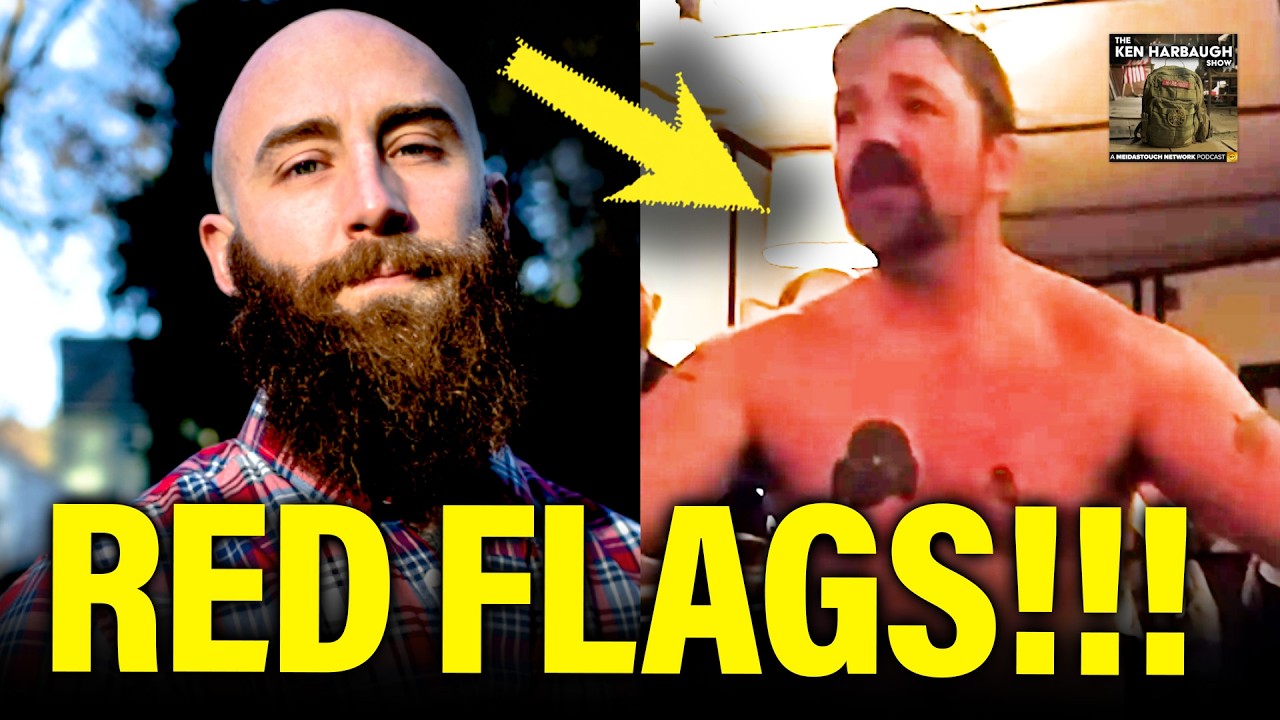

Graham Platner, the Democratic nominee for Senate in Maine, faced overwhelming calls to withdraw from the race after damning sexual assault allegations surfaced against him. For those asking why Graham Platner dropped out of the Maine Senate race — or should drop out — the answer is straightforward: the allegations are credible, his pattern of behavior is disqualifying, and no political calculation should override accountability. As Ken Harbaugh of the Midas Touch Network put it bluntly: "There's nothing to reflect on here. Platner needs to drop out now."
Why Graham Platner Had to Drop Out of the Maine Senate Race
The sexual assault allegations against Graham Platner did not emerge in a vacuum. They arrived alongside a broader pattern of troubling behavior — including a controversy over a Nazi-linked tattoo — that had already raised serious red flags among those paying close attention. While Platner publicly deliberated about whether to remain in the race, the Democratic political community, journalists, and veteran advocates were unified: staying in was not an option.
 01:15
Ken Harbaugh explains why 'innocent until proven guilty' cannot be the standard for elected officials
Watch at 01:15 →
01:15
Ken Harbaugh explains why 'innocent until proven guilty' cannot be the standard for elected officials
Watch at 01:15 →
Ken Harbaugh was direct about the standard that should apply: "Innocent until proven guilty is our standard in a court of law, but it cannot be our standard for elected officials. We need a higher bar than that." The women who came forward were credible. Their accounts, as reported in detail by Politico, were consistent and deeply specific. Both Harbaugh and veteran advocate Chris Goldsmith stated plainly that they believed the accusers.
The political stakes only amplified the urgency. Maine's Senate seat, currently held by Republican Susan Collins, is considered a key pickup opportunity for Democrats. Allowing Platner to remain as the nominee — damaged, distracted, and under a cloud of serious allegations — would have been both ethically indefensible and strategically disastrous.
What Are the Allegations Against Graham Platner?
The most recent and most serious allegation against Graham Platner involves sexual assault. The accuser's account was described by both Harbaugh and Goldsmith as not only credible but, in Goldsmith's words, "true." Goldsmith, who has spent decades working with survivors of sexual violence, said he has heard enough similar accounts to feel confident in his assessment.
04:30
Chris Goldsmith describes the moment he confronted Platner about the Totenkopf tattoo lie
Watch at 04:30 →
"I've had so many women and girls in my life since I was very young confide in me about stories that sounded just like this," Goldsmith said during the interview. "It is deeply, deeply painful to me." He noted that he deliberately avoids reading the detailed accounts of such allegations because of the toll they take, but that the pattern he recognized was unmistakable.
Attorney and advocate Cherylyn Hunt — who previously helped organize victims of Eric Swalwell — played a role in supporting Platner's accusers. Hunt has since founded a nonprofit organization specifically focused on removing sexual abusers from political life, a development that speaks to how systemic the problem has become across party lines.
What Was the Nazi Tattoo Controversy Surrounding Platner?
Before the sexual assault allegations dominated headlines, Platner was already under scrutiny for a Totenkopf tattoo — a skull insignia historically associated with the Nazi SS. Platner publicly claimed he had no idea what the Totenkopf symbol represented until very recently. Chris Goldsmith called that claim "a flat-out lie" — and he had receipts.
Years before Platner ever ran for office, he had reached out to Goldsmith, a veteran who quite literally hunts Nazis professionally, about getting involved in combating neo-Nazi organizations in Maine. Specifically, Platner expressed interest in tracking a group called the Blood Tribe — a neo-Nazi organization with ties to a Marine veteran that was building a training camp in Maine.
09:45
Goldsmith draws the line between PTSD-related violence and sexual violence
Watch at 09:45 →
"If you're looking to go after the Blood Tribe, you know what these real Nazis look like. You know what the Totenkopf is," Goldsmith told him directly during a podcast interview. "You are lying to me if you try to say that you don't know what the Totenkopf is." Platner's response, according to Goldsmith, was silence — which Goldsmith interpreted as an acknowledgment that he had been caught in a lie.
This earlier red flag is part of why Goldsmith never fully embraced Platner the way some fellow veterans did. It also explains why Harbaugh's team had concerns — when they reached out to Platner's campaign about a potential interview, the campaign declined once it became clear it would not be a friendly exchange.
Does PTSD Cause Sexual Violence? A Veteran Sets the Record Straight
One of the most important — and least discussed — aspects of the Platner controversy is the way his supporters used PTSD as a partial explanation or excuse for his behavior. Harbaugh pushed back on this directly, and Goldsmith, himself a severe PTSD sufferer, dismantled the argument with precision and personal experience.
"PTSD does explain things like hypervigilance and a quickness to do the fight-or-flight thing," Goldsmith acknowledged. "It does contribute to violence for some people — and it did for me." He described his own post-Iraq struggles, including dangerous street fights that nearly killed him, as genuine manifestations of untreated PTSD.
But he drew a hard, clear line: "Sexual violence is different. Sexual violence is not about fear."
According to Goldsmith, sexual violence is about dominance — a fundamental failure to recognize the autonomy, rights, and humanity of another person. It is not a symptom of hypervigilance. It is not a coping mechanism gone wrong. It is not the same as a combat veteran flinching at fireworks. Treating it as such does a profound disservice both to genuine PTSD sufferers and to survivors of sexual violence.
Harbaugh also raised a broader point that often gets lost in veteran-focused conversations: more than 90% of PTSD survivors have no combat experience. Many are women. Many are survivors of sexual assault themselves. The cultural tendency to frame PTSD as primarily a veteran issue — and then use it as a shield for veteran misconduct — is both factually wrong and deeply unfair.
Why Do Sexual Assault Victims Wait to Come Forward?
Platner's accuser received significant criticism for coming forward when she did — close to an election, after Platner had already secured the Democratic nomination. Both Harbaugh and Goldsmith rejected that criticism forcefully.
"It is a damn near impossible thing to do," Harbaugh said. "I frankly don't know any men who would have done what she did." Coming forward means risking public humiliation, online harassment, and having your identity permanently defined by the worst thing that ever happened to you.
Goldsmith added important context about why victims stay silent for so long — particularly in politically charged situations. Many women feel they cannot speak out against a Democratic candidate without inadvertently helping elect a Republican who might strip away civil rights. They feel, as Goldsmith put it, that they "owe it to America" to stay quiet. That kind of pressure — to protect a political outcome at the cost of your own justice — is a form of cruelty in itself.
"The amount of pressure that exists and the amount of anger and aggression and cruelty that is doled out at these victims is unconscionable," Goldsmith said. The courage it takes to come forward anyway, especially under those circumstances, deserves recognition rather than suspicion.
How Should Democrats Handle Sexual Misconduct Allegations?
Harbaugh was clear that the Democratic Party failed — not just in how it responded to Platner, but in how it got here in the first place. The deeper problem, as Goldsmith framed it, is that the Democratic Party has not built a bench. When a state like Maine is left choosing between an inadequately vetted candidate and an aging incumbent, the party has failed its voters long before any allegations surface.
The contrast with the Republican Party is real and important — Ken Paxton in Texas faces dozens of credible allegations and remains embraced by the Republican establishment and its voters. Democrats taking action, even belatedly, is meaningfully different. But "better than the other side" is not a standard worth celebrating. The bar must be higher, and the infrastructure to vet, develop, and support candidates must be built before a crisis forces the issue.
Who Is Chris Goldsmith and Why Did He Doubt Platner Early On?
Chris Goldsmith is a U.S. Army veteran and investigator who specializes in identifying and exposing neo-Nazi networks — including within the military and veteran communities. His work is both painstaking and dangerous, and his credibility on issues of extremism and character within veteran spaces is difficult to overstate.
Goldsmith's early skepticism about Platner wasn't born from partisanship — he initially found things to respect about the candidate. But the Totenkopf lie was a dealbreaker. A man who reaches out to a Nazi hunter, learns the landscape of domestic extremism in his own state, and then claims ignorance about a notorious SS symbol is not someone Goldsmith was willing to vouch for. His instincts, it turned out, were right in more ways than one.
The full conversation between Ken Harbaugh and Chris Goldsmith is available on the Midas Touch Network Substack. For Maine voters and Democratic Party officials alike, it is required listening.