
If you want to actually level up your life, the answer probably isn't a dramatic overhaul — it's the small, simple things most people overlook. The best micro habits to improve your life are the ones you can do in minutes, stack into your existing routine, and actually stick with. Here are seven that genuinely move the needle, based on nearly a decade of real-world testing.
What Are the Best Micro Habits to Improve Your Life?
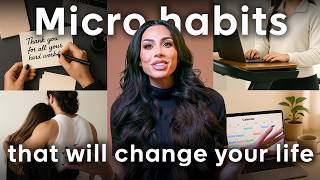
The micro habits that make the biggest difference aren't complicated. They're deeply unsexy. Breathe deeply. Walk more. Text a friend. Hug someone. Plan your Sunday. Stop eating at 9 p.m. None of these will go viral on their own — but together, they quietly build a life that feels clearer, calmer, and more intentional every single day.
 00:45
Demonstrating the Sunday weekly planning habit and how to structure your calendar
Watch at 00:45 →
00:45
Demonstrating the Sunday weekly planning habit and how to structure your calendar
Watch at 00:45 →
Let's break each one down so you can actually start using them.
How Do You Plan Your Week for Maximum Productivity?
This is arguably the single highest-leverage habit on this list. The rule is simple: if your week isn't planned by Sunday, you've already lost the week. Every Sunday, block out your entire week — meetings, workouts, rest, deep work, even your breathing sessions. Schedule it all.
The logic behind this is about separating your decision-making time from your execution time. When you walk into Monday without a plan, you default to whatever feels easiest in the moment. You end up reactive, not intentional. You waste at least an hour every morning just trying to figure out what to do that day.
02:10
Walk hacking in action — taking a business call while walking outdoors
Watch at 02:10 →
By front-loading all that mental work to Sunday, you free up your weekday energy for actually doing the things that matter. It's not a perfect system — things come up mid-week — but having a plan means you're always returning to something solid rather than starting from scratch every morning. This habit alone has driven more forward progress than almost anything else.
- Schedule everything: meetings, workouts, rest, projects, and even breathing time
- Use a digital calendar so you can see your whole week at a glance
- Do it every Sunday before the week begins — not Monday morning
Should You Stop Eating 3 Hours Before Bed?
If you track your sleep data at all — with a ring, watch, or app — you've probably already noticed this: eating late tanks your sleep quality. The habit of not eating three hours before bed is one of the simplest changes you can make for better energy, better recovery, and better fitness results.
Here's the science in plain terms: digestion takes energy. When you're asleep, your body wants to restore itself — repair tissue, consolidate memory, regulate hormones. If it's busy breaking down a late dinner, it puts less effort into all of that restoration. The result is lighter, less restorative sleep, and you wake up feeling like you barely rested.
03:55
Showing the deep belly breathing technique with hand placement on chest and stomach
Watch at 03:55 →
A practical workaround if you have a late dinner event: eat before you go. Show up, enjoy the company, and just pick at things lightly. People might notice. That's okay. You'll feel better tomorrow than they will.
The key mindset shift here is flexibility without rigidity. If an 8 p.m. dinner with people you love happens once in a while, go. Enjoy it. Don't be the person who skips life experiences over a bedtime rule. But as a default, eating earlier is a high-return habit that costs almost nothing.
How Does Deep Belly Breathing Reduce Stress Fast?
You're already breathing — but probably not like this. Deep belly breathing is one of the fastest, most accessible tools for emotional regulation that exists, and it works whether you believe in it or not. That's the part worth underlining: your physiology responds to deep breathing regardless of your mindset. You will calm down. It's just how you're wired.
Here's the technique: place one hand on your chest, one on your stomach. Inhale to about 75% capacity — not a strained, gasping breath, but a full, deliberate one. Then exhale as slowly and completely as you possibly can. Do this for about one minute, take a short break, and repeat three to five times. The whole thing takes roughly five minutes.
The best time to use it is before you feel like you need it. Don't wait until you're about to lose your temper or spiral into anxiety. Build it into your morning and evening on a calendar or set a phone alarm. Doing it proactively — not just reactively — is what makes the difference between managing emotions and being managed by them.
When the day gets chaotic — back-to-back meetings, hard conversations, high-stakes decisions — this five-minute reset is what keeps you present and grounded with whoever is in front of you.
Can Walking 6 Miles a Day Help You Live Longer?
Research on longevity consistently points to one surprisingly low-tech behavior: walking. In the populations studied with the highest rates of long life, people walked six or more miles per day — not in gyms, just as a natural part of their daily routine.
The challenge for busy people is fitting that kind of movement in. The solution is walk hacking — combining walking with something you already have to do. Take calls while walking. Listen to audiobooks or podcasts on your morning walk. Use walking as your creative thinking time. Many people find that their best ideas come while moving, not while sitting still staring at a screen.
Walking delivers three things simultaneously: physical exercise, mental clarity, and productivity. If you can take a meeting on your feet, you've just turned a sedentary hour into a health investment. Start your day with a walk and you'll notice the difference in how you think by 9 a.m.
How Do You Keep Relationships Strong When You're Busy?
This one takes 30 seconds. Literally. At the end of each day, do a quick look back at your calendar — every meeting, call, and interaction. Think about who showed up, who did something worth acknowledging, who came to mind during the day. Then send one short text. It doesn't need to be elaborate. "Hey, you crushed it today." "Was thinking about you." "Grateful for you."
The insight behind this habit is that busyness doesn't go away — it only grows. Waiting until life slows down to maintain relationships means they quietly erode. Instead of fighting your schedule, work with it. Batch your connection moments into one intentional 30-second act at the end of the day.
This habit improves team culture, strengthens friendships, and keeps you emotionally tethered to the people who matter — even when your days are relentlessly full.
Does Hugging Someone for 20 Seconds Really Reduce Stress?
Yes — and there's research to back it up. Hugging someone for 20 seconds triggers the release of oxytocin, the bonding hormone associated with lower stress, reduced blood pressure, and a general sense of wellbeing. Most people hug for two or three seconds. That's not enough.
Make it a morning habit. Before the day accelerates into its full chaos, take 20 seconds to hold the people you love. It sounds small because it is small — but it's a powerful physical reminder of what actually matters. In a life full of metrics, KPIs, and to-do lists, a 20-second hug is an anchor back to being human.
The Bottom Line on Micro Habits That Actually Work
None of these habits require expensive equipment, hours of free time, or a complete personality overhaul. They require consistency and intention. Start with one — whichever feels most urgent for where you are right now. Add another when it's automatic. The goal isn't perfection; it's steady, compounding progress.
Test these out. Adapt them to your life. And if you have a micro habit that works well for you, share it — the best ideas almost always come from real people figuring things out in the real world.