Great television chemistry isn't manufactured — it's built through years of trust, and occasionally stress-tested by telling your best friend, on camera, in front of millions of people, that he's boring. Terry Bradshaw knows this firsthand.
Stats Are Fine, But Only If They Mean Something
Bradshaw is quick to dismiss stat-heavy broadcasting as a crutch. Numbers are fine when they make a genuine point, but rattling off third-quarter splits based on wind direction doesn't illuminate the game — it just fills airtime. For Bradshaw, storytelling and personality have always been the currency of good sports television.
The Setup: A Perfect Comedic Moment Building in Real Time
Bradshaw recounts a particularly memorable segment from Fox NFL Sunday featuring guest Jimmy Johnson. Johnson told a story that had the whole set in stitches. Then Michael Strahan built on it and made it even funnier. The momentum was undeniable — the kind of live television lightning that can't be scripted.
The segment had a clear running order: Jimmy Johnson, then Michael Strahan, then Terry, then Howie Long. Bradshaw, a natural performer, understood the assignment. He had to match the energy, then top it.
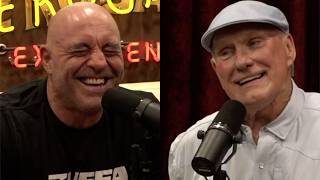 02:10
Bradshaw describing the on-set seating order and comedic build during the Jimmy Johnson segment
Watch at 02:10 →
02:10
Bradshaw describing the on-set seating order and comedic build during the Jimmy Johnson segment
Watch at 02:10 →
He did. The room was in hysterics. It was one of those stretches where everything clicks and everyone in the studio knows something special is happening.
The Howie Moment: When the Room Went Flat
Then came Howie Long's turn. Instead of riding the wave, Long pivoted to a depth-chart update: an outside linebacker for the Seattle Seahawks had sprained his ankle in pregame warmups and wouldn't be starting. His replacement, a player out of Kansas State, would be taking his spot.
The energy evaporated instantly.
Bradshaw went to commercial break, stared at Long, and waited. Long eventually turned and asked what was wrong. Bradshaw's response was simple and direct: "You're boring."
He's clear that he would never have said it if he didn't know he could get away with it. That's the key distinction. This wasn't a cheap shot — it was the kind of honest ribbing that only exists inside genuine friendship. Bradshaw and Long are, by his own description, best friends on the show despite being almost comically different: Long the Villanova guy, Bradshaw the engineering school graduate from Louisiana Tech.
Why It Worked: Trust as the Foundation of On-Air Chemistry
The moment could have gone badly. Instead, it made the rest of the show funnier. Long, stung and energized, leaned into it — his subsequent comments all threaded through the joke, and the self-awareness made him more entertaining, not less.
Bradshaw's point is simple: you cannot do that unless there is genuine trust between the people involved. The willingness to be vulnerable — to be called out, to have your professional instinct questioned in real time — only exists when the relationship underneath is solid.
The same principle applied when Strahan first joined the show. The cast welcomed him with half a cake. When Strahan asked why only half, the answer was immediate: he'd just gotten divorced, so he'd lost the other half. It was a sharp, slightly brutal joke — exactly the kind of thing that signals to a newcomer that he's among people who will treat him like a peer, not a guest.
The Lesson for Anyone in a Creative Partnership
What Bradshaw describes is something comedians and performers understand intuitively: a great ensemble isn't a collection of people being careful around each other. It's a group that has earned the right to be honest — sometimes uncomfortably so — because the trust is deep enough to absorb it. The boring stat read wasn't a crisis. It was an opportunity, and it only became one because Bradshaw knew exactly how far he could push, and Long was secure enough to be pushed.
The result was better television. And a better friendship, probably.