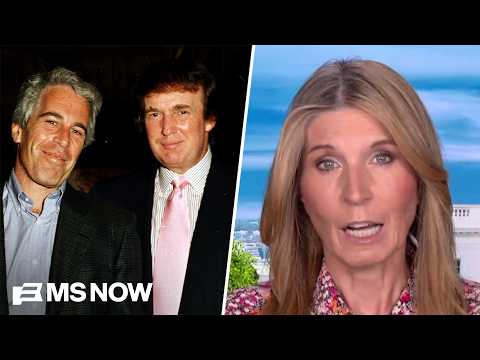
The Paramount and Warner Bros Discovery merger approval is one of the most consequential media deals in recent American history — and critics say it happened with almost no real scrutiny. On Friday, the Trump administration's Department of Justice antitrust division announced it saw no reason to block Paramount's $111 billion bid to acquire Warner Bros Discovery, clearing the path for CNN, CBS News, HBO, and two of Hollywood's biggest movie studios to fall under the control of a single billionaire family closely aligned with President Trump. For anyone who cares about independent journalism, that should be alarming.
Reporting live from Belfast, Northern Ireland, Democracy Now's Amy Goodman broke down what this merger means — and why media reform advocates are calling it a turning point for press freedom in America.
What Does the Paramount Warner Bros Merger Mean for News?
If this deal is completed, the Ellison family will control an extraordinary share of mainstream American media. We're talking about CNN, CBS News, HBO, Paramount Pictures, and Warner Bros studios — all under one corporate roof. Craig Aaron, co-CEO of Free Press and Free Press Action, described the implications plainly: fewer independent journalists, fewer hard questions asked of the powerful, and more content shaped to please a sitting president.
This is not a hypothetical threat. The pattern is already visible at CBS News, where editorial changes following the Skydance-Paramount merger have drawn widespread condemnation. The same playbook, critics warn, is now coming for CNN and Warner Bros' vast entertainment pipeline.
- CNN could face sweeping editorial changes modeled on what happened at CBS.
- HBO documentaries and original films may be deprioritized if they conflict with corporate or political interests.
- 60 Minutes, one of the last bastions of serious televised investigative journalism, has already been gutted.
- Streaming services from both companies will consolidate, reducing consumer choice.
As Aaron put it: "We get fewer and fewer choices and we get more and more of the same kind of cookie-cutter content produced."
Why Did the Trump DOJ Approve This Media Mega-Merger?
The Department of Justice's antitrust division said it found no evidence the merger would harm consumers, arguing instead that the deal would "increase competition across the media and entertainment ecosystem." Critics find that conclusion not just wrong, but suspicious.
Craig Aaron was direct: "This has been one of the most shallow and corrupt merger review processes we've ever seen." His argument is that the DOJ didn't look for problems — it looked for a way to wave the deal through.
Why would the Trump administration do that? Follow the relationships. Larry Ellison, Paramount's biggest shareholder and father of CEO David Ellison, is a close political ally of Donald Trump. Paramount leadership reportedly courted the administration with private dinners and made explicit promises about reshaping newsroom coverage — including at CNN — in exchange for a smooth approval process. That kind of transactional approach to antitrust review, Aaron argues, represents a fundamental abdication of the government's duty to the public.
Who Is Larry Ellison and How Did He Take Over CBS News?
Larry Ellison is the billionaire co-founder of Oracle and one of the wealthiest people on the planet. He is also Paramount's largest shareholder, making him the most powerful figure behind the scenes of this entire merger. His son, David Ellison, serves as Paramount's CEO — a position he secured after his company Skydance completed its takeover of Paramount, including CBS, last year.
Almost immediately after the Skydance-Paramount deal closed, the Ellisons made their editorial intentions clear. They installed Bari Weiss — a journalist known for her sharp criticisms of mainstream media and her right-leaning cultural commentary — as editor-in-chief of CBS News. The move was widely read as a signal of the ideological direction the Ellisons planned to take the network.
Why Was Bari Weiss Made Editor-in-Chief of CBS News?
Bari Weiss is a polarizing figure in American journalism. A former New York Times opinion editor who resigned in 2020 citing what she called a culture of ideological conformity, Weiss went on to found The Free Press, an independent media outlet with a contrarian, anti-"woke" editorial voice. Her appointment to lead CBS News was not a routine hire — it was a statement.
For the Ellisons, installing Weiss signaled a desire to move CBS News away from what they characterized as activist or liberal journalism toward something more palatable to a conservative political environment — and, critics argue, more palatable to the Trump administration whose approval they needed for their next merger. Whether or not that's a fair characterization of Weiss's journalism, the timing and context of her appointment made the political calculation hard to ignore.
Why Was Scott Pelley Fired and What Happened to 60 Minutes?
The firing of veteran CBS anchor Scott Pelley is perhaps the most visible symbol of what happens when a storied news organization is absorbed by politically motivated ownership. Pelley, a longtime anchor of the CBS Evening News and a fixture of 60 Minutes, became one of the latest casualties in the steady dismantling of CBS's investigative journalism infrastructure.
60 Minutes has been one of American television's most trusted investigative programs for more than five decades. Under the new Ellison-aligned leadership, the show has faced internal upheaval, with reports of stories being spiked and journalists facing pressure over coverage of the Trump administration. Pelley's departure is not an isolated incident — it is part of a broader pattern of clearing out journalists who ask uncomfortable questions.
Aaron put it starkly: "They're getting rid of independent journalists asking hard questions. They're spiking stories about crimes being committed by the Trump administration."
How Much Media Will the Ellison Family Control?
If the Paramount–Warner Bros Discovery merger closes as expected, the Ellison family's media empire will include:
- CBS News — one of America's oldest and most-watched broadcast news networks
- CNN — the dominant cable news brand with global reach
- HBO and Max — the streaming platform home to some of prestige television's most acclaimed content
- Paramount Pictures — a century-old Hollywood studio
- Warner Bros Pictures — one of the most valuable film libraries in the world
- Multiple streaming services — consolidated into a single corporate offering
The sheer scale of that concentration is what alarms media watchdogs most. This isn't just about news coverage — it's about who decides which stories get told, which documentaries get funded, and which films get made in America for the next generation.
Can State Attorneys General Still Block This Merger?
Here is the critical point that Craig Aaron wants the public to understand: this is not over. The Trump administration's DOJ approval does not end the process. State attorneys general have independent legal authority to challenge mergers on antitrust grounds, and Aaron is calling on AGs in California, New York, and other states to act now.
"Attorneys general can go to court, challenge this deal," Aaron said. "The evidence is overwhelming that this is too much concentration and consolidation. State attorneys general in California, in New York, in other states need to take action to block this deal because the Trump administration certainly isn't going to do it."
Historically, state-level antitrust challenges have succeeded in slowing or reshaping major corporate mergers even after federal approval. The legal window is open — but it requires political will and public pressure to push state officials to act.
The consolidation of American media under politically aligned billionaires is not an abstract policy debate. It determines what information reaches tens of millions of people every day — and who decides what counts as news worth telling. The Paramount–Warner Bros Discovery merger is a watershed moment, and whether states step up to challenge it may shape the future of independent journalism in this country.