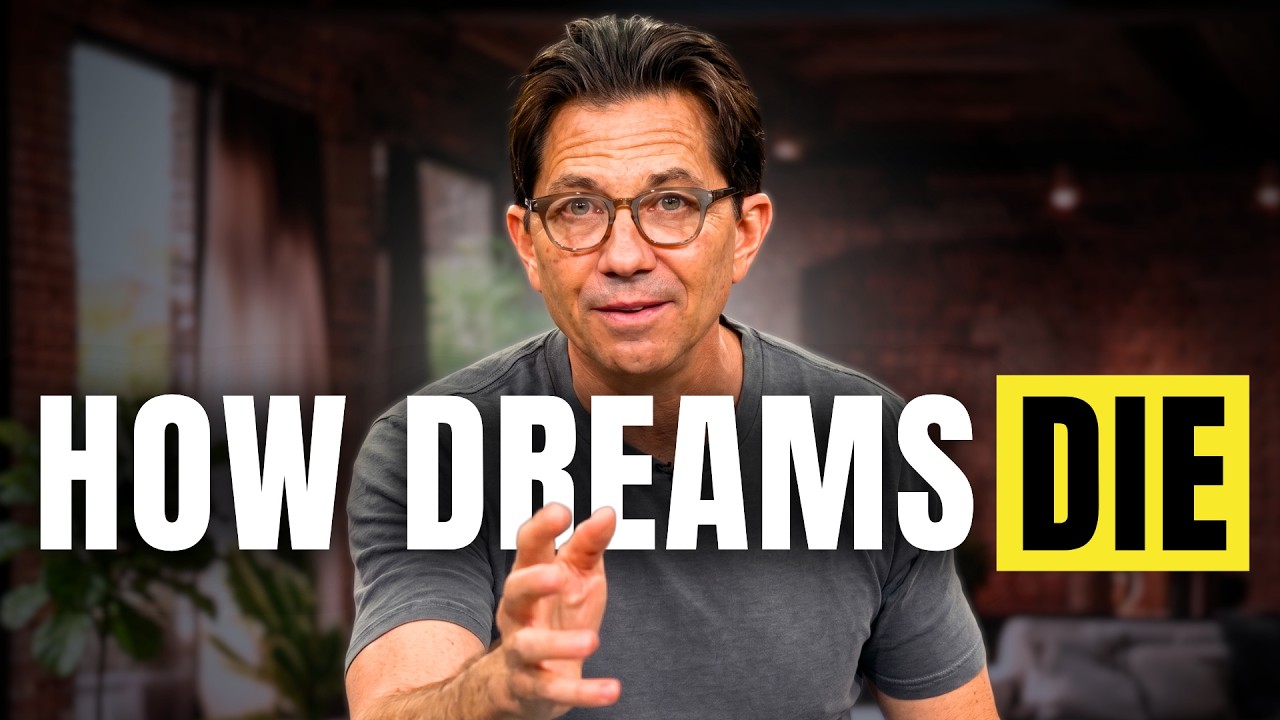

Most people never fail spectacularly. They don't go all-in on a dream, crash, and burn. Instead, they drift — slowly, imperceptibly — until one day they look up and realize they're nowhere near where they intended to be. That quiet drift is the real enemy of progress, and understanding how it works is the first step to stopping it.
How Failure Actually Happens
We've romanticized failure. We talk about it like it's a dramatic event — a bold attempt that ends in visible wreckage. But for most people, failure is far subtler. You don't remember the day you stopped pursuing your goal. You just gradually replaced focused action with a rotating cast of new ideas: a podcast, then a book, then a course, then a webinar. You go a mile wide and an inch deep rather than an inch wide and a mile deep.
Think about drifting in the ocean. You're not swimming against the current — you're just not paying attention. Then you look up and your towel is a quarter mile down the beach. The tide moved you without your awareness or consent. That's exactly how most people lose their dreams.
 02:15
Speaker illustrating the ocean drift analogy, gesturing to show lateral movement
Watch at 02:15 →
02:15
Speaker illustrating the ocean drift analogy, gesturing to show lateral movement
Watch at 02:15 →
Napoleon Hill identified distraction as the inner villain's greatest weapon. The logic is simple: if something can't destroy you directly, it keeps you busy with things that don't move the needle. It puts you in reactive mode instead of proactive. It makes you a dabbler — always starting, never finishing, never going deep enough to build real momentum.
The Head vs. The Heart
There are two voices operating inside every person. One lives in the head. One lives in the heart. And which one you listen to determines your destiny.
The head is where doubt lives. It's home to imposter syndrome, perfectionism, and analysis paralysis. The head asks, what if this goes wrong? It demands certainty before action. It wants every funnel built, every software configured, every detail dialed in before you take a single step. Left unchecked, the head will talk you out of everything worth doing.
The heart is where courage lives. The heart is fearless. It's where creativity, conviction, and resourcefulness come from. When you're operating from the heart, obstacles feel solvable. When you're trapped in your head, you're dead — paralyzed by scenarios that haven't happened and may never happen.
Consider this: you drive a car at 70 miles per hour with nothing but a painted yellow line separating you from oncoming traffic. If you stopped to analytically process that risk, you'd never drive again. But you don't think about it — you act. That same willingness to move without perfect information is exactly what building something meaningful requires.
Distraction Is a Strategy — Used Against You
The average person spends nearly five hours a day on their phone. Five hours. And yet the most common reason people give for not pursuing their goals is that they don't have time. The math doesn't lie — the time exists. It's being consumed by distraction masquerading as leisure or even productivity.
14:30
Speaker referencing a phone screen showing daily screen time statistics
Watch at 14:30 →
Distraction is most dangerous at the moment of breakthrough. When you're right up against something uncomfortable — a difficult conversation, a creative block, a decision that demands courage — the pull toward Netflix, social media, or yet another planning session becomes overwhelming. Instead of breaking through, you drift sideways. The breakthrough never comes. The drift continues.
The solution isn't more information. It's more intention. There's a critical difference between being a professional learner and being a professional action taker. Learning has diminishing returns when it's used as a substitute for doing. You can make your first sale, your first ten sales, before your funnel is perfectly built. Momentum comes from action, not preparation.
Indecision Is Still a Decision
Every time you hesitate, delay, or defer, you are making a choice — the choice to stay stuck. Indecision is not neutral. It is a vote for the status quo.
What's needed in those moments isn't more time or more information. It's what might be called a moment of power — a conscious decision to act now, even imperfectly, even while afraid. Clarity doesn't come from logic. It comes from the heart. And if you're waiting for a logical reason to pursue something meaningful, you'll wait forever, because none of the most important things in life are logical.
Consider the people who have built extraordinary things despite circumstances that made success statistically improbable. Growing up without resources, without credentials, without the support of people who could see their vision. Not logical. But driven by something that couldn't be reasoned away.
Drifter or Driver: A Daily Choice
There are two ways to show up: as a drifter or as a driver. A drifter reacts, dabbles, gets distracted, and lets the current carry them wherever it goes. A driver makes decisions, commits deeply to a direction, and goes all in — even while scared, especially while scared.
Fear doesn't disqualify you from action. Everyone building something new is scared. The difference between those who break through and those who drift is simply whether they act despite the fear or wait for it to pass. It doesn't pass. You move through it.
The goal isn't a perfect plan executed under perfect conditions. The goal is to be in the game — to be the one who took the field rather than sitting in the stands with someone else's name on your jersey, critiquing how it's being played. You might get hit. You might miss. But you'll have moved, and movement compounds in ways that standing still never can.
Stop waiting. Start moving. The best time to act on what you've been drifting away from is right now.