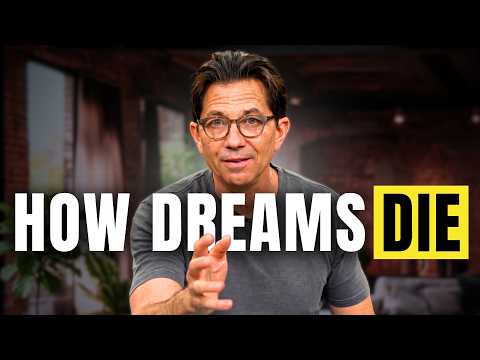
Change rarely takes as long as people think — and almost never happens the way they plan. The people who break through aren't smarter or luckier than those who stay stuck. They've simply crossed a threshold that turns years of thinking into one decisive second. Understanding what drives that shift, and how to engineer it deliberately, is the difference between a life fully lived and one quietly regretted.
The One-Second Decision
Tony Robbins often asks people who say it took them seven years to quit smoking: did it really take seven years? Or did it take seven years of thinking about quitting — and one second to say, "Enough. It's over. I'm done"?
Most major decisions work exactly this way. You stay in a soul-draining job for fourteen years, hating it for the last four, until one day you're fired and the decision is made for you. You stay in a relationship you're unsure about until the other person ends it. The external event forces a reckoning. But here's what that reveals: the decision was always available. You just hadn't made it yet.
The most clarifying question you can ask yourself is a simple one: if you reached the end of your life and your maker played you a video of the person you could have been — and then offered you one wish — what would you ask for? Almost everyone would say the same thing: to go back. And the answer to that is: you're already back. You're here. Start now.
Character Is Who You Are When No One Is Watching
Breakthroughs aren't just about bold public decisions. They're built — or eroded — in private moments. Character isn't what you post on social media or say in meetings. It's what you do when no one can see you. The person who professes loyalty in public but cuts side deals in private isn't the loyal person they present themselves as — they're the side-deal person. Our private behavior is our real behavior. Closing that gap between who we present and who we actually are is foundational to any lasting change.
Pushing Through vs. Knowing When to Pivot
One of the hardest judgment calls in any pursuit is knowing whether resistance means you should push harder or change direction entirely. The answer isn't to quit at the first sign of difficulty — but it's also not to torture yourself indefinitely.
There's genuine value in going deeper into something you don't yet love. How you do one thing is how you do everything. The discipline, the craft, the habits you build in a role you don't enjoy will transfer directly to the work you do love. The reframe that makes this workable: I'm not here forever, but while I'm here, I'm going to be exceptional.
If you're genuinely in the wrong place, give yourself a structured exit rather than an open-ended escape. Commit fully for six months — come in early, raise your performance, make yourself unrecognizable in the role — while simultaneously building what comes next. Use that window to launch the coaching program, build the client base, grow the audience. Don't quit the old thing until the new thing outperforms it. That's not timidity; it's strategy.
Measuring Progress, Not Busyness
The most common trap for people working toward something new is confusing activity with progress. Building a beautiful coaching curriculum, perfecting a logo, dialing in a twelve-session program with AI tools — these feel like progress. Sometimes they are. But they can also be sophisticated forms of avoidance, letting your brain tick boxes without confronting the uncomfortable actions that actually move the needle.
The fix is rigorous measurement — not of work, but of outcomes. Ask yourself every three weeks: where was I, and where am I now? Am I closer to the goal?
More specifically, measure the things you've been avoiding. Did you reach out to anyone? Did you try to set an appointment? Did you post publicly that you're a coach? It's easy to feel busy. It's harder to be honest about whether you're winning or losing on the metrics that actually matter.
 18:30
Speaker illustrating the gap between building a coaching program and actually getting clients
Watch at 18:30 →
18:30
Speaker illustrating the gap between building a coaching program and actually getting clients
Watch at 18:30 →
Simplify to One Constraint at a Time
Overwhelm is almost always the result of looking at everything at once. The AI space is a perfect example: click one training video and your algorithm floods you with a hundred more, each making you feel further behind. The same dynamic plays out with fitness goals, business plans, and career pivots. New Year's resolutions collapse by week two because people try to overhaul everything simultaneously.
The alternative is Kaizen — one constraint at a time. Know the destination, but don't stare at the whole map at once. In January, walk every other day. In February, walk and cut bread. In March, add cutting sugar. In April, add weights. Stack one change on the last until the new behavior becomes the baseline.
Applied to any goal, the process looks like this:
- Identify the goal with extreme specificity. Not "write two chapters" — which two, what's their purpose, how should the reader feel after reading them, what does excellence look like?
- Reverse-engineer the steps from that specific outcome back to today.
- Address fear directly. Fear almost always comes from the meaning you assign to something. Reframe the meaning — AI as a tool that frees your time rather than a threat to your job — and the fear often dissolves.
- Embrace change as the only path to significance. If you're not climbing, you're sliding. Modeling proven practices and taking one step at a time turns resistance into momentum.
The people who break through aren't the ones who found a secret. They're the ones who stopped waiting for the external event to force their hand — and made the one-second decision themselves.