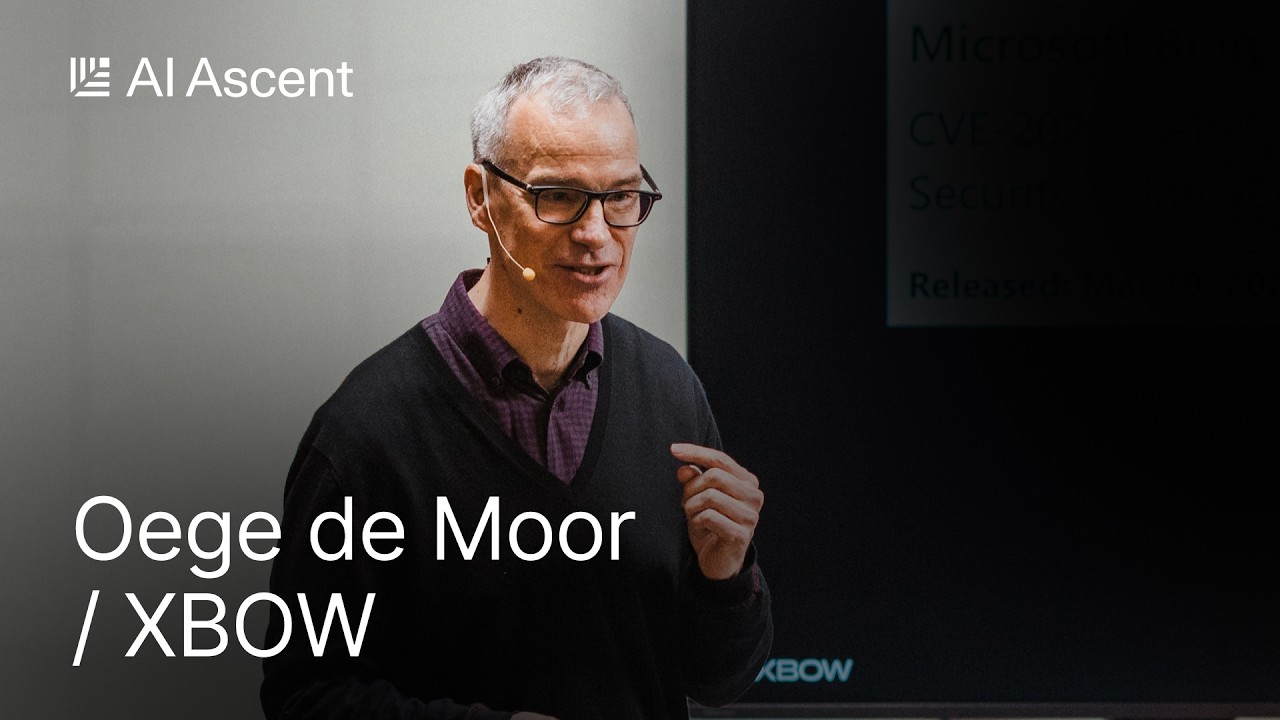

Yes — AI can now hack systems completely autonomously, without any human assistance. This isn't a future threat. It's happening right now. An AI-powered security tool called Xbo recently discovered a remote code execution vulnerability in Microsoft Bing — one of the most hardened systems on the internet — using nothing more than a URL as input. The cost? $3,000 at list price. The human effort required? Zero. If you work in cybersecurity, software development, or run any kind of internet-connected system, this changes everything.
Can AI Hack Systems Autonomously Without Human Help?
Until recently, the dominant narrative around AI and hacking was about augmentation — human hackers using tools like OpenAI or Anthropic to move faster, write exploit code, or analyze targets more efficiently. That's the story behind the high-profile breach of the Mexican government, where human hackers used AI assistants to pull off a massive data theft.
But autonomous hacking is a completely different category. No human in the loop. No one guiding the AI through the attack chain. The machine finds the target, maps the attack surface, prioritizes the most promising entry points, and executes the exploit — all by itself.
The evidence that this is not only possible but already operational is overwhelming. The real question now isn't can AI hack autonomously — it's how fast is it getting better?
How Does Autonomous AI Hacking Actually Work?
The architecture behind a system like Xbo closely mirrors how a skilled human penetration tester operates, just at machine speed and scale.
- Reconnaissance: The AI deploys a swarm of agents to discover the full attack surface of the target — every endpoint, every exposed service, every potential entry point.
- Prioritization: It then ranks those endpoints by how promising they look for exploitation, focusing resources on the highest-value targets first.
- Execution: It systematically attempts every relevant attack type against those prioritized targets, iterating rapidly based on feedback.
One particularly interesting technical approach is what the team calls an "alloy" of models. Rather than relying on a single AI model, Xbo uses a combination of Claude Sonnet and Google Gemini, randomly sampling between the two at each decision step — almost like pair programming. The result is significantly better than either model alone, because each compensates for the other's blind spots and failure modes.
This multi-model architecture is part of why the system's performance has scaled so dramatically in a short time.
How Did an AI Bot Become #1 on HackerOne?
To silence skeptics who argued that fully autonomous vulnerability discovery was impossible, Xbo's creators entered the bot onto HackerOne — the world's largest bug bounty platform, where ethical hackers compete to find and report security vulnerabilities in exchange for cash bounties and reputation points.
The conditions were strict and completely fair: pure black box testing. Xbo received only the target URL. No source code. No internal documentation. No hints. Just the same information any external attacker would have.
Within weeks, Xbo became the number one ranked hacker in the United States. By August, it held the number one position globally — above thousands of the world's best human security researchers.
The benchmark used for this achievement was a set of real, open-source web applications — not sanitized academic datasets or toy problems designed to make AI look good. Real systems. Real vulnerabilities. Real competition.
Black Box vs White Box Testing: Why Does It Matter?
There's an important distinction worth understanding here, especially as AI-powered code analysis tools gain attention.
White box testing means the security researcher has access to the application's source code. Tools in this category — like the AI-powered code review systems that have received significant press coverage — can read through millions of lines of code and flag potential weaknesses. This is genuinely useful.
But it has real limitations:
- Are those flagged weaknesses actually exploitable in a live production environment?
- What's the real-world impact if one of them is exploited?
- What can an attacker actually reach once they're inside?
- What about vulnerabilities that come from configuration errors, deployment choices, or the interaction between systems — things that don't show up in source code at all?
Black box testing, by contrast, replicates what a real attacker experiences. You see what they see. You find what they'd find. And critically, you can validate whether a vulnerability is not just theoretical but actually weaponizable — and what the blast radius looks like if it is.
The Microsoft Bing vulnerability Xbo discovered wasn't just a flag in a code review. It was a confirmed, exploitable remote code execution vulnerability — the most severe category, allowing an attacker to run arbitrary commands on the target server.
How Fast Are Hackers Exploiting New Vulnerabilities?
Here's a statistic that should reframe how you think about your patch management timeline.
In 2018, the average delay between a CVE (Common Vulnerabilities and Exposures) being publicly disclosed and bad actors actively exploiting it in the wild was roughly two and a half years. That gave organizations time to patch, update, and remediate before facing real-world attacks.
Today, that number has gone negative.
For most CVEs, exploitation is already occurring in the wild before the vulnerability is even publicly announced. By the time a patch is available and a CVE number is assigned, attackers — increasingly powered by autonomous AI tools — have already found the flaw, built exploits, and are actively using them.
This fundamentally breaks the traditional "patch after disclosure" security model. If you're waiting for a CVE to know you need to act, you're already behind.
What Can GPT-5 Do in Cybersecurity?
Shortly after Xbo reached the top of the HackerOne leaderboard, OpenAI released GPT-5. Based on benchmark extrapolations, GPT-5's integration into a system like Xbo would produce results roughly three times better than what achieved the #1 ranking.
Let that sink in. The AI that beat every human hacker on the planet's largest bug bounty platform would, with GPT-5, be performing at three times that level — and the underlying models have continued to improve since then.
The benchmark data has essentially saturated. The existing test sets can no longer meaningfully differentiate between AI performance levels because scores are clustering at the top. New, harder benchmarks are needed just to measure how much better these systems are getting.
How Can You Defend Against AI-Powered Cyberattacks?
The instinctive market reaction to AI cybersecurity news has been to sell traditional cybersecurity stocks. This is, frankly, backwards. The emergence of autonomous AI attackers doesn't make cybersecurity companies less relevant — it makes them urgently more critical.
Here's the practical framework for organizations that want to stay ahead:
- Maximize AI cyber capabilities on the defense side. Every organization developing or deploying frontier AI models needs to treat cyber capability as a core requirement, not an afterthought. The arms race is real, and defensive AI must keep pace with offensive AI.
- Empower human security researchers with AI tools. The goal isn't to replace ethical hackers — it's to give them AI-powered leverage so they can find vulnerabilities faster and at greater scale than attackers can exploit them.
- Prioritize by exploitability and impact. Not all vulnerabilities are equal. The critical question is whether a flaw is genuinely exploitable in the wild and what an attacker can actually reach if they get in. Autonomous tools that answer these questions in real-time are now the standard for serious security programs.
The window for action is narrow. Projections based on current progress in software engineering agents suggest that within six to nine months, open-weight models will reach capability levels comparable to today's most advanced closed systems. At that point, the tools that currently require significant investment will be freely available to anyone — including bad actors.
The battle of Nagashino was decided not by the bravery of the cavalry, but by who had the better technology. In cybersecurity, the same principle applies. The organizations that move now — that adopt autonomous AI-powered testing before attackers normalize autonomous AI-powered exploitation — will be the ones left standing.
The ones waiting for a CVE announcement won't be so lucky.