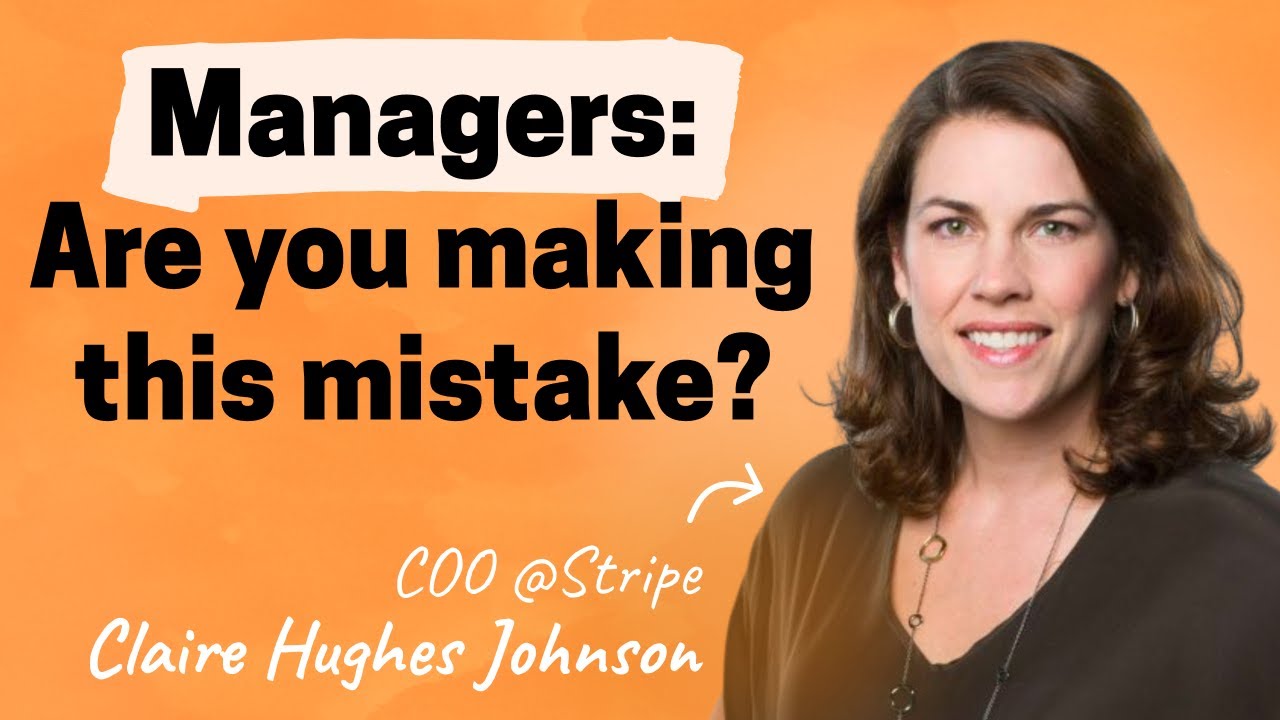

The real job of a manager is not to be the smartest person in the room and hand out answers. If you've been operating that way, you've been solving the wrong problem. The actual job of a manager is to enable people to be their very best on your team — and that requires a completely different mindset, a different set of tools, and a surprising amount of curiosity.
This framework, drawn from a conversation on Lenny's Podcast, breaks down how great managers think about coaching, feedback, and the one-on-one dynamic in a way that's practical, honest, and immediately applicable.
 00:45
The core reframe: a manager's job is to enable people, not to be the expert
Watch at 00:45 →
00:45
The core reframe: a manager's job is to enable people, not to be the expert
Watch at 00:45 →
What Is the Real Job of a Manager?
Too many managers fall into the trap of thinking their value comes from expertise — from knowing the answer and dispensing it to their team. But that model doesn't scale, and more importantly, it doesn't develop people.
The better mental model: your job is to create an environment and context where your team can do their best work. That means providing the right information, removing obstacles, and offering coaching — not commands. The shift from "expert who tells" to "coach who enables" is the foundational move every manager needs to make.
This doesn't mean you never share your expertise. Sometimes someone comes to you and says, "Can you show me exactly how to do this?" — and that's fine. But those moments are the exception, not the rule. Most of management is something quieter and more collaborative than that.
How Do You Coach Employees Without Lecturing Them?
Here's where most managers go wrong a second time: they think coaching means lecturing. They confuse coaching with instruction — walking someone through a process step by step, explaining the right way to build a spreadsheet model, telling them what they did wrong.
03:10
Real-world example of the mirror technique used in a post-presentation debrief
Watch at 03:10 →
Real coaching looks nothing like that. Real coaching is exploration. It's being genuinely curious about the other person's experience. It's asking questions you don't already have the answer to. It's sitting with someone and saying, together, let's figure out what's actually happening here.
This kind of coaching respects the person across from you. It assumes they have insight into their own patterns — insight you can help them surface, but not insight you can hand them. When you approach a one-on-one with curiosity instead of conclusions, you're treating your team member as a full human being, not a problem to be fixed.
The Mirror Technique
One of the most powerful tools in a coaching conversation is simply holding up a mirror. Instead of diagnosing someone, you share your experience of them and invite them to reflect on it.
For example: after a presentation that felt a little off, rather than saying "You were nervous and it showed," you might say: "I felt like you might have been a little nervous in there — was that true for you?" You own your observation. You leave room for them to disagree. And you open a door.
05:50
Reid Hoffman shares the story of the most honest feedback he ever received
Watch at 05:50 →
Sometimes they'll say no, and you back off. Sometimes they'll say yes, and a real conversation begins. Either way, you've created space for growth without creating defensiveness.
What Is Hypothesis-Based Coaching and Why Does It Work?
One of the most underused ideas in management is the scientific hypothesis — applied to people development. Here's the core insight: intuition gets a bad reputation, especially in data-driven environments. But a well-informed hypothesis is just structured intuition. It's pattern recognition organized into a testable idea.
Too many managers wait until they have overwhelming data before they say anything to a team member about an area for improvement. By then, the pattern is entrenched, the feedback feels like a verdict, and the opportunity for early course-correction is long gone.
The alternative: take some data, form a hypothesis, and explore it. You don't need certainty. You need good intentions and a curious mindset. If you're bringing something up because you genuinely want to help, say that. Frame it as a hypothesis, not a judgment.
The approach might sound like: "I've noticed this pattern in your work — have you noticed it too? I'm not sure what's driving it, but I wanted to bring it up and see what you think." That's not a performance review. That's a coaching conversation. The difference is enormous.
How to Give Feedback That Employees Actually Hear
Feedback that lands well has a few key ingredients. First, it's specific and observational — you're describing what you saw, not interpreting character. There's a world of difference between "you seemed uncomfortable" and "you pushed your chair back from the table and stopped contributing to the discussion."
Second, effective feedback is owned by the giver. You're not declaring truth; you're sharing your experience. Phrases like "my experience of you in that meeting was..." or "from where I was sitting, it looked like..." do this naturally. They invite dialogue instead of shutting it down.
Third, great feedback is timely. Not retrospective. Not saved for the annual review. The best coaching conversations happen close to the moment, when the experience is still fresh and the learning is still available.
The goal of all of this is not to correct someone — it's to help them see something they couldn't see on their own. You're not a judge. You're a mirror.
How Did Reid Hoffman Build a Culture of Radical Honesty?
Reid Hoffman — co-founder of LinkedIn — has a refreshingly self-aware take on his own management style. He's admitted openly: "I'm more of a leader. I'm not a great manager." But the story he tells to illustrate his operating principle is remarkable.
Early in his career, he hired someone more operationally minded. At one point, Reid was making a suggestion about something they should do. The guy stopped him and said: "Reid, I wouldn't hire you to manage a McDonald's."
Most leaders would flinch at that. Reid's reaction? Essentially: okay, good, now tell me what we need to do to fix this. He found the moment inspiring — not because the feedback was flattering, but because it proved something more important: that he had built an environment where someone felt safe enough to say that to his face.
That's the real leadership insight. It's not about having the thickest skin. It's about creating conditions where your team doesn't have to protect you from the truth. When people can give you that kind of feedback — direct, honest, a little uncomfortable — it means they trust you. And that trust is how a lot of good work actually gets done.
How to Run One-on-Ones That Actually Develop People
Pull all of this together and you get a model for the one-on-one that's genuinely useful. Not a status update. Not a performance check-in. A real developmental conversation.
- Start with curiosity, not conclusions. Go in with observations and hypotheses, not verdicts.
- Ask how they experienced it first. Before sharing your perspective, hear theirs. You might be surprised.
- Own your observations. Use "I noticed" and "my experience was" — not "you always" or "you never."
- Make it mutual. Invite them to reflect observations back at you. Great managers learn from their teams too.
- Don't wait for certainty. A well-formed hypothesis is enough to open a conversation. Waiting for a mountain of data just delays growth.
The best managers aren't the ones with all the answers. They're the ones who know how to ask the right questions — and who've built enough trust that their team will tell them the truth right back.
That's the job. Not expert. Not lecturer. Coach, mirror, and environment-builder. Get that right, and everything else gets easier.