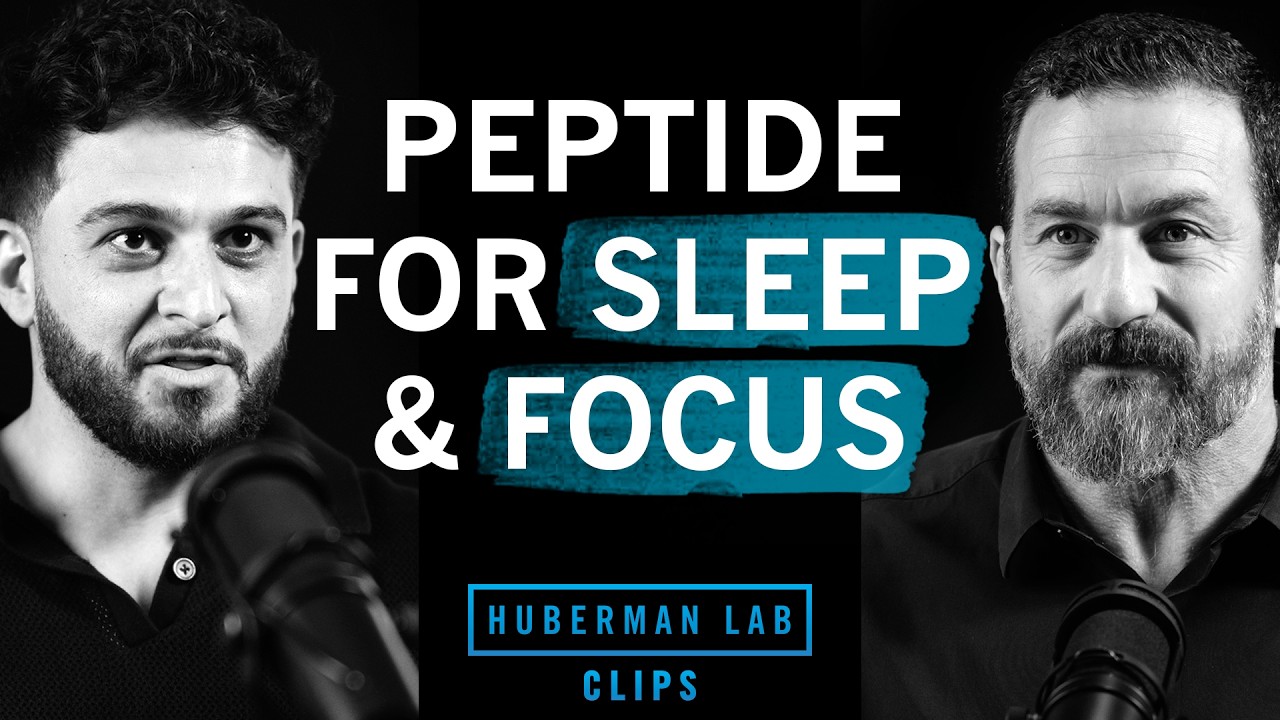

Pinealon — more accurately called EDR after its three-amino-acid sequence — is a tripeptide almost unknown outside of biohacking circles, yet it has a research history stretching back to Soviet-era military science. One of the speakers in this conversation reports that a well-timed dose can nearly double his REM sleep in the final hours of the night. The other spent the previous evening experimenting with it for the first time. What follows is a rare, candid look at what this compound is, where it came from, and what it appears to do in the brain.
Origins: Soviet Soldiers, Submarines, and Accelerated Aging
The story begins with Dr. Vladimir Khavinson, a Soviet researcher tasked with a blunt military problem: soldiers, submariners, and cosmonauts were aging visibly faster than normal. Crew members returning from months aboard nuclear submarines looked a decade or two older. Astronauts showed the same pattern. The Soviet Union wanted a biological countermeasure — and Khavinson was assigned to find one.
The scientific trail he followed was old. Since the late 1800s, researchers had experimented with organ extracts — grinding up pineal glands or thymus tissue and injecting them into research subjects — and observing rejuvenating effects. Khavinson noticed that the returning soldiers shared two consistent problems: severely disrupted circadian rhythms and compromised immunity. Pineal and thymus extracts seemed to reverse both. His insight was to ask why. Rather than assuming the whole organ was necessary, he looked for the active components and found peptides — short chains of amino acids within the extracts that appeared responsible for the observed effects.
From the pineal gland he isolated epitalon. From the thymus, a family of peptides including thymalin and thymogen. From a ground-up cortical brain extract called cortexin, he identified the tripeptide now sold as pinealon. This is a persistent source of confusion: despite its name, pinealon does not come from the pineal gland. Epitalon does. Khavinson's naming conventions have caused decades of mix-up. For clarity, EDR — the peptide's three-letter amino acid shorthand — is a more precise label.
What EDR Actually Does in the Brain
EDR has no identified receptor, which is unusual and mechanistically interesting. Rather than binding to a specific protein target the way most drugs do, it appears to interact directly with DNA. The peptide fits into the groove of the double helix near promoter regions, making those regions more accessible to transcription factors. In plain terms, it is switching on genetic programs — particularly those governing brain metabolism, antioxidant defense, and metabolic flexibility.
The pathways implicated include GDF11, SOD1, SOD2 (both key antioxidant enzymes), irisin, PPARα, and PPARγ. This last pair — the PPAR receptors — are well-known regulators of fat metabolism and insulin sensitivity, which helps explain why some users report drops in fasting blood sugar and even HbA1c improvements. The broader picture Khavinson proposed is that the body naturally produces these short peptides in abundance when young, and their synthesis declines with age. Replenishing them, he argued, partially restores youthful cellular signaling.
Khavinson studied EDR extensively in athletes, giving one group the peptide and another a placebo before training sessions taken to exhaustion. The EDR group maintained performance significantly better after maximal effort. His literature, however, contains no mention of REM sleep — unsurprisingly, given that the research was conducted in the Soviet Union in the 1970s, long before consumer sleep trackers existed.
 18:30
Discussion of Khavinson's athlete study design: training to exhaustion, then performance test comparing pinealon vs. placebo groups
Watch at 18:30 →
18:30
Discussion of Khavinson's athlete study design: training to exhaustion, then performance test comparing pinealon vs. placebo groups
Watch at 18:30 →
The REM Sleep Effect: Anecdote With a Plausible Mechanism
One of the speakers has used EDR roughly three times per month for some time and reports a consistent and striking pattern. Taking it at the beginning of the night suppresses deep slow-wave sleep and produces excess REM — an unfavorable shift. But if he waits until a natural mid-night awakening (common after the first deep-sleep cycle) and injects a small dose at that point, the REM he would normally accumulate in the final 90 minutes expands to roughly three hours within the same total sleep window. The architecture shifts without extending sleep duration.
More surprisingly, he reports that his REM percentage on the nights between doses also improves — suggesting a lingering neurological effect rather than a purely pharmacological one tied to each administration.
The mechanism is speculative but coherent. If EDR improves the oxidative state of neurons through PPARα, PPARγ, irisin, and the SOD enzymes, the brain may simply generate more REM as a byproduct of being metabolically healthier — in the same way that a well-rested, well-nourished brain naturally cycles into REM more efficiently. The compound is not acting on a sleep receptor; it may be improving the underlying cellular conditions that make high-quality REM possible.
Increasing REM through other means is notoriously difficult. Avoiding food close to bedtime, exercising earlier in the day, and warming the sleep environment in the final third of the night all offer modest benefits. Alpha-GPC taken in the afternoon may provide a small boost. EDR, if the anecdotal reports hold up to scrutiny, would represent a qualitatively different category of intervention.
22:10
Speaker describing sleep tracker data showing shift from 1.5 hours to approximately 3 hours of REM after mid-night EDR dose
Watch at 22:10 →
Dosing, Timing, and Practical Considerations
Khavinson designed EDR as a cognitive performance and anti-stress compound, and the original oral formulations — still available in Kazakhstan and Russia at around 200 micrograms — were taken in the morning. That timing makes sense for its daytime effects: users report reduced brain fog, better sustained attention, and improved performance under physical stress.
The sleep-enhancing application appears to be a discovered secondary use, enabled partly by modern sleep tracking that Khavinson never had access to. For sleep purposes, timing matters considerably. Taking it at sleep onset at higher doses tends to disrupt architecture; smaller doses mid-sleep appear more favorable.
- Oral dosing: Typically 0.5 mg to 3 mg; Russian formulations often around 200 mcg
- Injectable: Goes systemic; assumed to cross the blood-brain barrier given its small tripeptide size
- Morning use: Reported to reduce brain fog and support cognitive and athletic performance
- Mid-sleep use: Anecdotally associated with significant REM amplification
- Frequency: Anecdotal reports cluster around a few times per month, not daily
EDR is orally bioavailable through di- and tripeptide transporters in the gut. As a tripeptide, it is small enough that blood-brain barrier penetration is plausible, though not yet formally confirmed in published literature.
Known Risks and What Remains Uncertain
The honest answer is that the risk profile is poorly characterized by Western standards. The existing literature is Russian, not peer-reviewed by current gold-standard methods, and long-term human safety data in the Western sense does not exist. Khavinson's theoretical framework — that these peptides are endogenous, decline with age, and are being restored rather than introduced as foreign agents — is a reasonable hypothesis, not an established safety argument.
Reported adverse effects from a large informal sample of users include:
- Blood sugar drops: Likely from PPARα/γ activation; diabetics and those prone to hypoglycemia should exercise caution
- Vivid or intense dreams: Including nightmares in some individuals
- Dose-dependent sedation: At higher doses, some users experience pronounced sleepiness
- Disrupted sleep architecture: Particularly at sleep onset if the dose is too high or timing is wrong
No serious adverse events have appeared in the Russian clinical literature, and no clear toxicity signal has emerged from informal anecdotal tracking. But absence of evidence is not evidence of absence, and the compound should be approached with appropriate caution — particularly given the limited oversight on sourcing and compounding quality.
What makes EDR scientifically interesting is not any one effect in isolation but the coherence of the picture: a compound that appears to improve neuronal metabolism through transcriptional regulation produces downstream benefits across wakefulness, physical performance, and sleep quality simultaneously. Whether that picture survives rigorous clinical investigation remains an open question — and one worth asking.