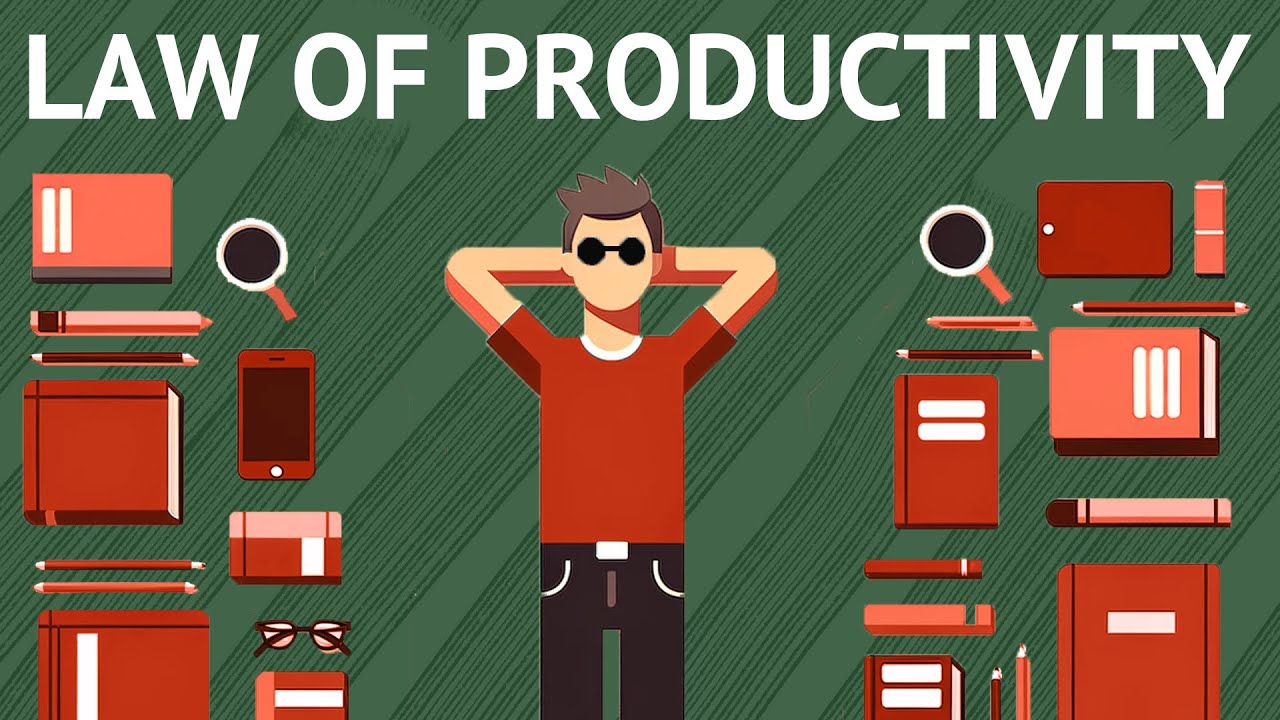

How to Be More Productive (The Real Answer)
If you want to know how to be more productive, here's the uncomfortable truth: the productivity apps, morning routines, and time-blocking hacks you've been collecting are probably not the problem — your intention is. Productivity isn't something you chase directly. It's a byproduct of why you're doing what you're doing in the first place. Get the intention right, and productivity follows almost automatically. Get it wrong, and no tool or tactic in the world will save you.
The world has never demanded more from us than it does right now. The cost of living is climbing, AI is reshaping entire industries, wages aren't stretching as far as they used to, and competition for meaningful work has never been fiercer. It's no wonder people are obsessed with squeezing more out of every hour. But most people are attacking the wrong target — and the results show it.
 00:30
The growing pressure to be productive in a world of rising costs and AI disruption
Watch at 00:30 →
00:30
The growing pressure to be productive in a world of rising costs and AI disruption
Watch at 00:30 →
Why Do Productivity Hacks Stop Working?
Open any productivity blog, YouTube channel, or best-seller list and you'll find the same recycled advice: use this app, try this system, copy what this billionaire does before 5am. These tips aren't useless — but they're shallow. They treat productivity like a mechanical problem when it's actually a philosophical one.
The deeper issue is that most people pursue productivity with a narrow, self-serving goal: make more money, move faster, look busier, outcompete everyone else. And when that's the lens you're looking through, here's what happens — you optimize for the wrong things. You learn shortcuts that benefit you in the short term but erode trust, relationships, and reputation over time. You produce derivative work that doesn't add anything new to the world. You burn out chasing a finish line that keeps moving.
Tactics without the right intention are like a GPS with the wrong destination programmed in. You'll get somewhere efficiently — just not where you actually need to go.
01:45
The formal statement of the Law of Productivity and how intentions create a chain reaction
Watch at 01:45 →
What Is the Law of Productivity?
The law of productivity can be stated simply: the productiveness of an outcome is proportional to the goodness of the intention behind it.
In other words, we don't become productive by trying to be productive. Productivity is largely a byproduct of our intentions. Here's how the chain works:
- Your intentions dictate how you see the world.
- How you see the world dictates what you learn.
- What you learn dictates your productivity.
This isn't just motivational fluff — it has real, measurable consequences for the outcomes you produce. And the best way to understand it is through a story.
Selfish vs. Selfless: Which Mindset Wins?
Jim's Coffee Shop: Built on Greed
Jim opened his coffee shop with one goal in mind: make as much money as possible. So every day, he observed his business through a financial lens. What generated more sales? What maximized margins? Pretty quickly, he discovered that lying about his coffee — claiming it came from rare, exotic beans when it didn't — got customers to pay more. So he leaned in. He started fabricating ethical sourcing claims, premium origins, and quality credentials he didn't have.
03:10
Jim's coffee shop story — how selfish intentions led to short-term gains and long-term collapse
Watch at 03:10 →
In the short term, Jim looked wildly productive. Revenue was climbing. From the outside, he seemed like a success story. But his intention was rotten at the core, and that rottenness shaped everything he learned — how to deceive more effectively, how to scale manipulation, how to keep the lies from unraveling.
Eventually, an anonymous tip led a journalist straight to the truth. The exposé went public. Lawsuits followed. Jim went bankrupt.
His selfish intention didn't just make him a bad person — it made him genuinely, measurably unproductive. Every hour he spent building that business was ultimately wasted.
04:20
Janice's turnaround moment — when a blogger's review changed everything
Watch at 04:20 →
Janice's Coffee Shop: Built on Service
Janice opened her coffee shop with a completely different goal: to serve her community the best possible cup of coffee they'd ever tasted. So every day, she watched her customers through a different lens entirely. What did they love? What made them close their eyes on the first sip? What brewing method brought out the best in each bean?
She learned fast — but what she learned was genuinely valuable. She developed a real, rare skill: the ability to make extraordinary coffee. The problem was, great coffee costs more to make, and in the short term, customers weren't willing to pay the premium. Business was slow. From the outside, Janice looked unproductive.
But she stuck with her intention. She kept serving. She kept learning. And then one day, a well-known food blogger walked in, took one sip, and couldn't believe what she'd found. She posted about it. The city showed up. Lines formed out the door.
Janice's selfless intention made her world-class at something people genuinely wanted. That's what real productivity looks like.
How Do Your Intentions Shape Your Success?
The contrast between Jim and Janice isn't just a moral fable — it's a map for understanding how intention shapes learning, and how learning shapes outcomes.
When your intention is selfish, you pay attention to the world selfishly. You notice what you can extract, what you can exploit, what you can get away with. And over time, you get very good at extraction — which puts you on a collision course with the community you depend on. Because here's the thing: you are part of that community. When you harm it, you harm yourself.
When your intention is selfless, you pay attention differently. You notice what people need, what's missing, what would genuinely help. And over time, you get very good at serving — which builds trust, reputation, loyalty, and demand. The community lifts you up because you've been lifting it up all along.
This is why intention isn't just a feel-good concept. It's the mechanism that determines what you learn — and what you learn is the real engine of long-term productivity.
How Does Serving Others Build a Better Business?
The most productive people in any field — the entrepreneurs, creatives, scientists, and builders who actually move the needle — share a common thread. They're obsessed with the problem they're solving, not the reward they're chasing. They want to make something better, understand something deeper, or help someone more effectively. The financial and professional rewards tend to follow naturally, because genuine value creation is magnetic.
This doesn't mean you have to be a saint. You can absolutely want to earn well, grow fast, and build something significant. But when those desires become the primary lens, they start distorting your attention in ways that quietly sabotage you. The goal isn't to be selfless to the point of self-destruction — it's to make service the foundation that everything else is built on.
Ask yourself: What am I actually trying to do for the people I serve? Start there. Let that question shape what you pay attention to and what you learn. And then watch what happens to your productivity.
The One Shift That Changes Everything
If you want to be more productive — genuinely, sustainably more productive — stop looking for a better system and start looking at your intentions. Ask whether you're trying to extract value or create it. Ask whether the knowledge you're accumulating serves you alone or serves the people around you.
The law of productivity is undefeated: good intentions produce better outcomes, over time, every time. Not because the universe rewards virtue with magic — but because good intentions direct your attention toward what actually matters, and sustained attention toward what matters is what mastery, impact, and real success are made of.
The world is more competitive than ever. But the people who will thrive in it won't be the ones who found the best productivity app. They'll be the ones who figured out why they were doing the work in the first place.