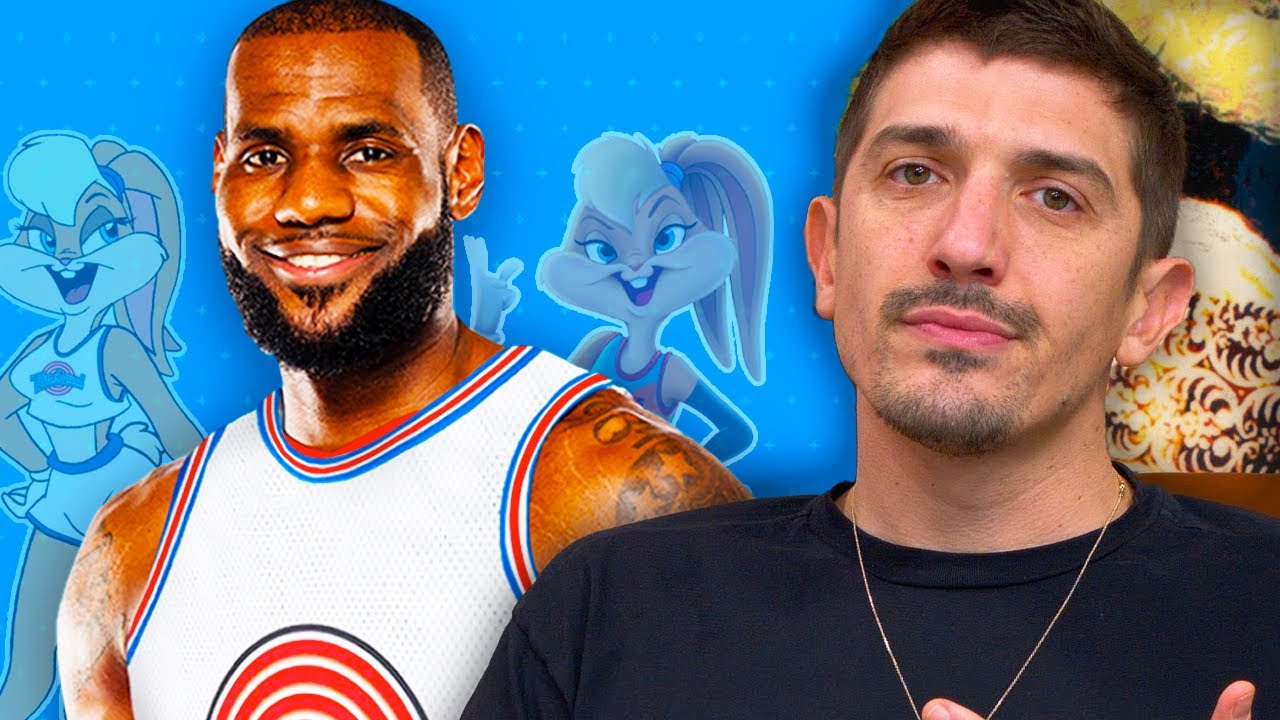

Space Jam: A New Legacy had a fundamental identity crisis baked into its premise. By leaning on Looney Tunes characters that today's kids have never seen while simultaneously failing to deliver the nostalgic payoff adults actually wanted, the film landed in a no-man's-land that satisfied almost no one. It is, as one observer put it, the most LeBron James way to make a movie: ambitious, calculated, and somehow still missing the point.
Kids Don't Know Who Bugs Bunny Is — And That's Warner Brothers' Fault
The core problem is generational disconnect. The children who should be the primary audience for a movie like this have grown up on Fortnite, Minecraft, Peppa Pig, and Paw Patrol. Bugs Bunny, Daffy Duck, and Tweety Bird are not part of their cultural vocabulary. Warner Brothers stopped actively curating and marketing those characters to new generations, which means the equity that made the original Space Jam work — the universal recognition of those characters — simply does not exist anymore for anyone under a certain age.
The film's jokes compound the problem. The Looney Tunes humor is built on inside knowledge: you need to understand that Yosemite Sam has a temper, that Tweety is deceptively dangerous, that a certain character has a lisp for a reason. A child encountering these characters for the first time has no framework for why any of it is funny. There is a lady drinking a martini and acting drunk. There is a character spitting everywhere. Without context, it is just noise. The humor was written for adults who grew up watching Saturday morning cartoons — not for the kids sitting in the theater.
Don Cheadle's villain threatens to delete the Looney Tunes if LeBron loses the big game. The irony is that Warner Brothers had already effectively deleted them from the cultural conversation long before the movie was made. The villain won years ago.
The Nostalgia Play Also Didn't Work
So if the film failed to reach kids, did it at least deliver for adults? Not really. The generational split matters here too. Adults who loved the original Space Jam loved it because of Michael Jordan — a figure of almost mythological cultural status. LeBron James, for all his accomplishments, does not carry the same weight for that demographic. He belongs to a slightly younger generation, the group that debates Jordan versus LeBron rather than simply accepting Jordan as a fact of life.
The marketing did not help. Commercials leaned heavily on locker-room drama and LeBron's personal narrative rather than leading with the cartoons doing anything genuinely funny or surprising. There was little to signal to nostalgic adults that this would scratch the itch the original created. The film tried to thread an impossible needle: make adults feel something through nostalgia while also doing enough new things to feel relevant — and the attempt at both undermined each individually.
What They Should Have Done Instead
The path forward was actually straightforward, and the hosts sketched it out clearly. You had two viable options:
- Commit fully to the nostalgia play. Make the movie unabashedly for the generation that grew up with Looney Tunes. Keep the 2D animation style, lean into the classic characters, and let adults drag their kids along for the ride the way parents dragged kids to Star Wars rereleases. Accept that this is a niche play and execute it with craft.
- Modernize completely. Ditch Looney Tunes entirely and build the film around characters kids actually recognize — something from the world of gaming, streaming animation, or contemporary franchises. The comparison made was to something like Dora the Explorer or SpongeBob: characters with genuine equity among children today. If the point is to introduce kids to a shared universe, use characters they already love as the entry point.
Instead, the film produced a hybrid: old characters rendered in a mix of 2D and 3D animation styles, jokes calibrated for adults, and a story framework that assumed cultural familiarity no longer exists. The three-format approach — real, 2D, and 3D — added visual complexity without solving the underlying narrative and audience problem.
A Bigger Lesson About Inherited Franchises
Director Malcolm D. Lee, who has genuine credits to his name — Girls Trip, Roll Bounce, Barbershop: The Next Cut — was working within a set of constraints that may have been impossible to overcome. The film was a Warner Brothers property, which meant the Looney Tunes had to be central. But Warner Brothers' own neglect of those characters over the preceding two decades had eroded exactly the foundation the film needed to stand on.
There is a broader lesson here about franchise stewardship. Cultural icons require continuous cultivation across generations. You cannot let characters go dormant for twenty years and then expect children to show up to a movie because their parents vaguely remember liking them. The kids are not on the inside of the joke. They never were. And a film built almost entirely on inside jokes to an audience that is no longer inside is not a movie — it is a very expensive piece of nostalgia merchandise that forgot to check whether nostalgia was still in stock.